Eastern Europe Now Largest Talent Bloc at The International
A data analysis of The International from 2011 to 2026 shows Eastern Europe supplied 39% of all players in 2026, becoming the event's largest modern talent
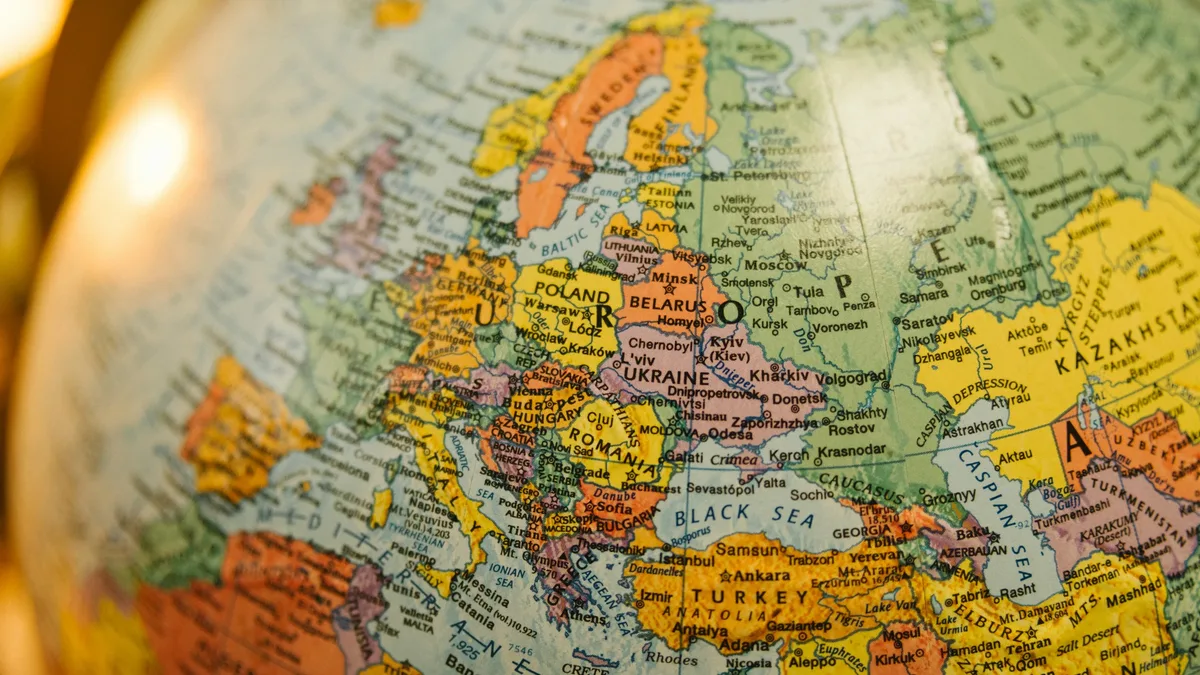
Eastern Europe supplied 39% of all players at The International 2026, establishing itself as the largest modern talent bloc in Dota 2's premier event. According to an analysis by Esports Insider covering all 15 editions from 2011 to 2026, China remains the historical leader with 280 player appearances but has not produced a champion in a decade.
The analysis examined 1,282 player representations, linking each competitor's country and region to their team's final placement. It reveals a significant shift in the global balance of power over the past 15 years, moving beyond simple team affiliations to understand regional strength.
China's Historical Dominance Fades
No country comes close to China's historical footprint at The International. Chinese players account for 280 of the 1,282 total appearances, more than double Russia's 138. Those players reached the top eight 171 times, a conversion rate of 61.1%.
This dominance was built early. Between 2011 and 2016, China supplied 140 player representations and 98 top-eight finishes. It also contributed 14 champion representatives through Invictus Gaming in 2012, Newbee in 2014, and Wings Gaming in 2016. Since Wings lifted the Aegis in 2016, China has not won a single TI. Its share of the player field fell to 12% in 2022 and 9% in 2023. Although it recovered to 16% in 2026, none of its 13 representatives finished inside the top eight.
Eastern Europe's Dramatic Rise
The resurgence of Eastern Europe extends far beyond the success of Team Spirit, which won titles in 2021, 2023, and 2026. The region supplied 131 player representations across the five Internationals from 2022 to 2026, compared with 75 from Western Europe and 57 from China.
Its share of the field climbed steadily in that period.
| Year | Eastern Europe Player Share |
|---|---|
| 2022 | 19% |
| 2023 | 29% |
| 2024 | 31% |
| 2025 | 34% |
| 2026 | 39% |
Russia and Ukraine drive this growth. Russian players recorded 138 TI appearances, while Ukrainian players added another 70. Together, they make up almost 89% of Eastern Europe's 234 historical appearances. The region's recent strength is not only about volume. It secured 68 of the 200 top-eight places available from 2022 to 2026 and 11 champion representations.
Western Europe's Trophy Efficiency
Western Europe ranks second historically with 260 appearances but leads all regions with 26 TI champion appearances. It has placed 129 representatives inside the top eight, a 49.6% conversion rate. Its championship spread is broad, with wins from Alliance (2013), Team Liquid (2017), OG (2018, 2019), Tundra Esports (2022), Team Liquid again (2024), and the European members of Team Falcons (2025).
Sweden leads the region's player pool with 65 TI appearances. Across the five most recent TIs, Western Europe placed 49 of its 75 representatives in the top eight, a 65.3% conversion rate. The analysis notes this was higher than every region with at least 50 appearances during that period, even though Eastern Europe supplied 56 more players.
Other Regional Performances
Southeast Asia has high participation but low conversion. The region accounts for 241 historical appearances but only 80 top-eight finishes and three champion representations. From 2022 to 2026, it recorded 71 appearances and only 11 top-eight results, a 15.5% rate. Malaysia has the third-most appearances historically with 85, while the Philippines ranks sixth with 68.
South America established a regular presence after having no players before 2017. Its appearances peaked at 22 in 2023, with Peru accounting for 55 historical appearances. However, only 21 of the region's 87 appearances ended in the top eight, with no titles.
The MENA region has overperformed relative to its size. Its 51 appearances are far fewer than Southeast Asia's, but 34 reached the top eight and six became champions, giving it a 66.7% top-eight rate.
The International's map is now more diverse, with South America a permanent part of the field and multinational teams making national boundaries more porous. Yet the top remains selective. China, Eastern Europe, and Western Europe supplied 61.0% of all players but 70.5% of all top-eight finishes. They also account for 60 of the 75 total champion representations, exactly 80%. Western Europe remains the most reliable championship connector, while Eastern Europe has expanded into the largest modern talent bloc.